

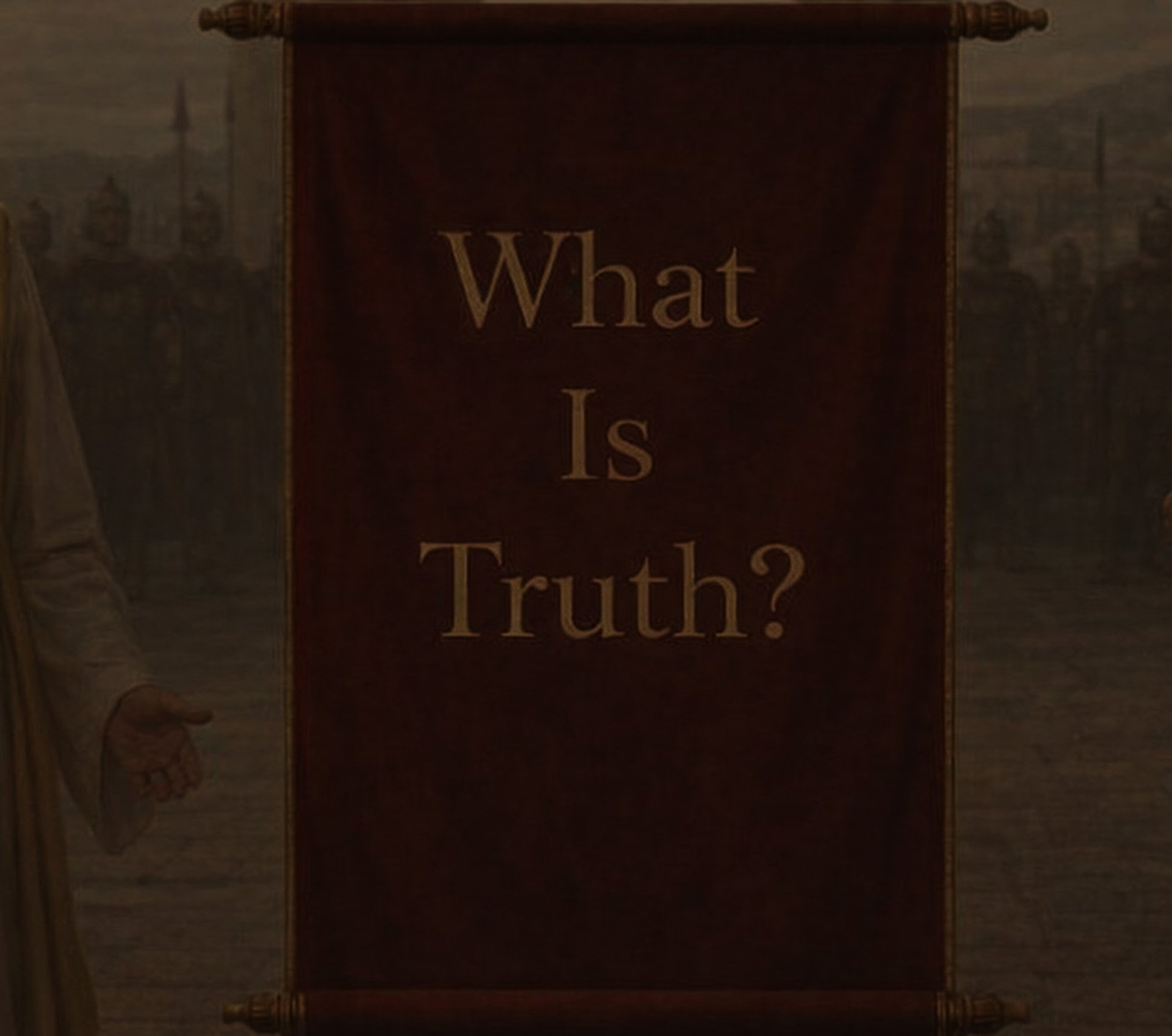
What Is Truth?
There are so many of us who ask this million-dollar question. Truth is like trying to catch a slippery bar of soap with wet hands. It’s not easy. Grasping the truth and fully understanding it takes work. This study will explore how we can acquire God's truth.
This excerpt explores the complex nature of truth, distinguishing between subjective and objective realities. It argues that many people, like Pilate in the biblical reference, ask about truth but avoid seeking the demanding, life-altering answers it provides. It contrasts subjective truths, which are based on personal, often unreliable, opinions, with objective truths, which are factual, indisputable, and constant. Ultimately, absolute truth is found exclusively through seeking Christ and engaging with the scriptures, which contain wisdom reserved for those who humbly and persistently pursue it. This godly truth requires internalization and application in one's life, transforming the seeker into a reflection of truth for others.
This synopsis highlights eight focal points, providing a brief overview at a glance.
1. The Human Avoidance of Truth
Many people mirror Pontius Pilate by asking about truth but walking away before hearing the answer. Absolute truth is inherently perilous, extreme, and highly inconvenient to human nature. People frequently avoid genuine truth because it isolates them from crowds, shatters comfortable illusions, and forces them to face uncomfortable realities.
2. Subjective Perspectives Versus Objective Facts
The common assumptions people rely upon are merely subjective truths based on personal opinions rather than facts. In sharp contrast, objective truth stands independently of any individual's experience, belief, or disagreement. Like the fixed North Star, objective facts remain completely motionless and constant even if people choose to ignore them.
3. Sensory Processing and Information Overload
God equipped humans with five physical senses to interact with and appreciate the created world. However, the spiritual enemy intentionally bombards the human mind with an excessive overload of sensory data. This strategic noise effectively drowns out God's still small voice, causing heavenly insights to be mistaken for earthly sensationalism.
4. The Rejection of Impactful Knowledge
Most people only chase after truths that make them feel comfortable and require zero lifestyle changes. Valuable information is often collected merely to gain social internet clicks or to pass along to others. Conversely, the absolute truth that pulverizes the ego and resets human behavior remains widely unpopular and abandoned on dusty shelves.
5. Truth as a Person Rather Than Information
Reading the scriptures strictly to accumulate inspired information is completely inadequate. True biblical principles serve primarily as a guide to building an active relationship with the Creator. Because absolute truth is personified in Christ, searching for wisdom without Him leaves human hearts completely empty and wandering in darkness.
6. The Web of Human Interpretation
This study warns that the world's alternative truths resemble a dangerous soup of deceit, disease, and defeat. Even the Holy Bible is routinely exploited and manipulated by human systems to create a web of confusion. When scripture is treated as an exclusive mystery that only elite theologians can explain, it becomes untrustworthy to the average seeker.
7. The Hidden Reservoir of Godly Wisdom
Godly truth functions as a highly valued treasure intentionally hidden in secret places. While superficial information is scattered everywhere like a cheap buffet, deep spiritual knowledge is reserved for the humble. God freely opens this hidden storehouse to anyone who cries out with persistent prayer and deep sincerity.
8. Digital Internalization and Accountability
Receiving divine truth carries a massive personal responsibility and a high accountability lifestyle. Spiritual wisdom cannot be hoarded; it must be systematically consumed, digested, and fully applied to transform the individual. Discovering beautiful pearls of wisdom without practicing them in daily life is as foolish as playing marbles with priceless pearls on a beach.